


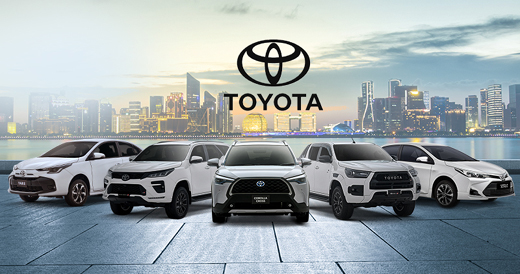
Policy Delays and Tax Revisions Signal Moderated Auto Sector Growth for FY27, Says Indus Motor Company
Indus Motor Company (INDU) expects growth in Pakistan’s automotive sector to moderate in fiscal year 2026–27 due to delays in announcing a successor to the Automotive Industry Development and Export Plan (AIDEP) 2021–26, which expired in June 2026. This lack of policy visibility has created uncertainty around future production planning, localization decisions, and investments. Despite these upcoming headwinds, the local market remains competitive, offering consumers access to 31 brands and over 100 locally assembled models across various segments. Reflecting this competitive environment, INDU reported a 33% year-over-year increase in total vehicle sales to 45,035 units, driven largely by a 56% surge in passenger car sales, while commercial vehicle volumes remained steady.
MG Motors Pakistan Launches New HS Petrol Variant at Rs8.8 Million
The domestic auto manufacturing industry continues to operate at less than 50% of its total installed capacity, leaving substantial room for volume recovery and higher localization without requiring immediate capacity expansions. Demand trends are also being reshaped by recent changes in Pakistan’s vehicle taxation regime, notably an increase in the General Sales Tax (GST) on Hybrid Electric Vehicles (HEVs) and Plug-in Hybrids (PHEVs) from 8.5% to 25% starting July 2026, which triggered price adjustments. Meanwhile, tax rates on internal combustion engine vehicles and battery electric vehicles remained unchanged as the government balances tax revenues, consumer affordability, and local manufacturing development.
Regulatory changes targeting used-vehicle imports have provided a welcome boost to local assemblers. The government’s decision in January 2026 to abolish the Baggage Scheme and introduce mandatory pre-shipment inspections under the Gift and Transfer of Residence schemes contributed to a decline in used-car imports—falling from around 42,000 units in FY25 to 38,000 units in FY26. Even with this reduction, imported used vehicles still accounted for nearly 19% of total sales reported by the Pakistan Automotive Manufacturers Association (PAMA). Going forward, however, INDU warned that the National Tariff Policy 2025–30 could narrow the price gap between locally assembled models and completely built-up (CBU) imports, potentially impacting local manufacturing competitiveness.
Looking ahead, consumer auto financing is emerging as a potential catalyst for demand recovery, with financing penetration increasing from 21% to 26%. INDU noted that further improvements—such as higher financing limits and extended repayment tenures—could significantly boost vehicle affordability for buyers. Ultimately, the long-term trajectory of Pakistan’s automotive market will depend heavily on the timing and structure of the next automotive policy, as well as how local assemblers navigate tax adjustments, imported vehicle competition, and evolving financing conditions in FY27.
Jetour Pakistan Begins Local Assembly of T2 i-DM Plug-in Hybrid SUV

